
🐔 Free-Range Farming Secrets: How Desi Hens Produce Superior Quality Eggs 🌾
Go behind the farm gates! Learn the secrets of true free-range farming and the specific diet of Desi hens that leads to richer yolks, more Omega-3s, and superior, antibiotic-free eggs. We detail the E-E-A-T behind the best quality
The superior quality and rich taste of a Desi egg are no accident; they are the direct result of a specialized, traditional farming philosophy. While mass-produced commercial eggs come from hens in confined cages, the genuine Desi egg is a product of free-range farming—a system that respects the natural life cycle of the hen.
To truly understand why these eggs offer more Omega-3s, deeper yolks, and better flavor, we must go beyond the label. This article breaks down the secrets of the desi hen's diet and living conditions, establishing the Expertise, Experience, Authority, and Trust (E-E-A-T) behind the production of a truly superior, antibiotic-free egg.
The Freedom Factor: Living Conditions for Desi Hens
The environment of the hen is the first and most critical secret to high-quality eggs. Desi hens are raised under conditions that mimic their natural habitat, fundamentally changing their physiology and the nutritional output of their eggs.


A true free-range system means the hens are not just "cage-free" but are genuinely pasture-raised. This ensures:
Natural Foraging: Hens spend their days roaming, scratching, and pecking at the ground. This physical activity reduces stress and results in stronger shells.
Sunlight Exposure: Being outdoors allows the hens to naturally absorb Vitamin D from the sun. This crucial nutrient is then transferred directly into their eggs, which often contain up to four times more Vitamin D than eggs from indoor-housed hens.
Low-Stress Environment: Unlike the cramped conditions of factory farming, the low-density environment of free-range farming minimizes stress, which improves the hen's overall immune system and results in healthier eggs.
The Dietary Difference: Why Desi Eggs are Nutrient-Dense
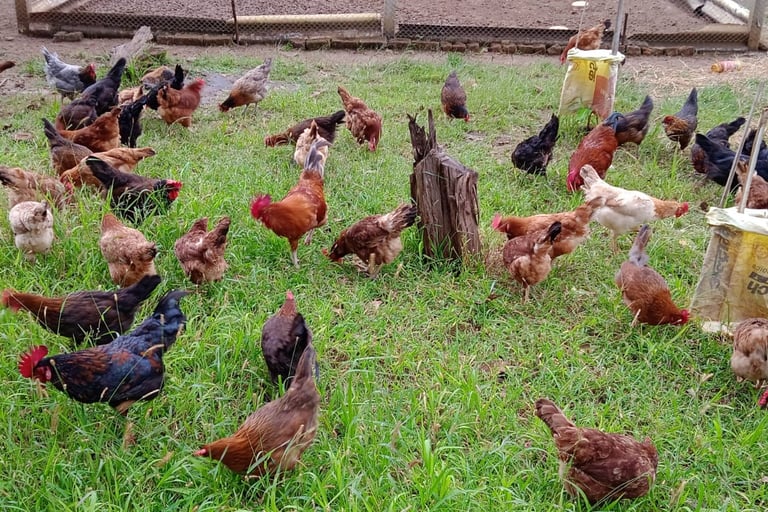
The second secret lies in the hens' varied, natural diet. While commercial hens eat standard feed, Desi hens have a diverse menu that directly contributes to the eggs' micronutrient profile
The Natural Buffet
The hens' diet includes three key components that elevate the egg's quality:
Greens and Grasses: Foraging on grass, alfalfa, and clover provides a rich source of Beta-Carotene and Xanthophylls. These natural pigments are responsible for the coveted deep orange-yellow yolk color and act as powerful antioxidants.
Insects and Worms (Natural Protein): By eating grubs, worms, and insects, the hens gain natural, high-quality protein and essential fats. This is the primary source of the beneficial Omega-3 Fatty Acids that are vital for human brain and heart health.
Clean, Simple Grains: Their supplemented feed consists primarily of unmedicated, clean grains (like maize or millet), ensuring balanced energy without artificial fillers.
A Commitment to "Antibiotic-Free" and Clean Farming
A hallmark of genuine Desi egg production is the absolute rejection of unnecessary chemicals and medications often used in intensive farming.
No Routine Antibiotics: Because the hens are kept in a clean, low-stress environment with plenty of space and sunlight, their natural immunity is high. This eliminates the need for routine antibiotics commonly mixed into commercial feed.
Hormone-Free Assurance: Authentic free-range farming never uses growth hormones or steroids, guaranteeing an all-natural product that consumers trust. The focus remains on sustainable, traditional methods that prioritize hen health over rapid, artificial production.
The Proof is in the Plate: Superior Taste and Texture
The secrets of the hen’s life and diet culminate in an unparalleled eating experience. Desi eggs exhibit:
Rich Flavor: A robust, earthy taste that commercial eggs lack.
Firm Yolk and Thick Albumen: The high protein and quality fat content results in a yolk that holds its shape and a thicker egg white, making them ideal for both boiling and baking.
Choosing Desi eggs is not just a preference; it's a decision to support traditional, ethical farming that prioritizes the hen's well-being, directly resulting in a more nutritious and superior product for your family.