
🧐 How to Identify Original Desi Eggs and Avoid Fake Country Eggs in the Market 🕵️♀️
Are you buying genuine Desi Eggs or just cleverly marketed fakes? Learn the tell-tale signs: from yolk color and shell texture to market practices. Empower yourself to identify authentic country eggs every time and avoid disappointment!
The demand for Desi Eggs – also known as country eggs or gavran/nati अंडे in India – is soaring, driven by their superior nutritional profile, richer taste, and the appeal of their natural, free-range origins. However, with rising demand comes a rising problem: the prevalence of fake country eggs or mislabeled commercial eggs trying to pass off as the genuine article in the market. It's a frustrating experience to pay a premium for what you believe is an authentic Desi egg, only to find a pale yolk and bland taste. This guide will equip you with the knowledge and visual cues to confidently identify original Desi eggs and ensure you're always getting what you pay for. Don't fall for imitations – let's uncover the secrets of genuine country eggs!
Why "Fake" Desi Eggs are a Growing Problem
The term "Desi Egg" isn't strictly regulated in many regions, leaving a loophole for unscrupulous sellers. Common tactics include:
Mislabeled Brown Eggs: Commercial brown eggs are often rebranded as "Desi" because many associate brown shells with country eggs. However, shell color alone is not an indicator of a desi hen's diet or lifestyle.
Artificially Enhanced Yolk Color: Some commercial poultry farms might add synthetic carotenoids (pigments) to chicken feed to make the yolk appear darker, mimicking the rich hue of genuine desi eggs.
Ambiguous Marketing: Using terms like "farm-fresh" without actual free-range practices.
The Tell-Tale Signs of an Original Desi Egg
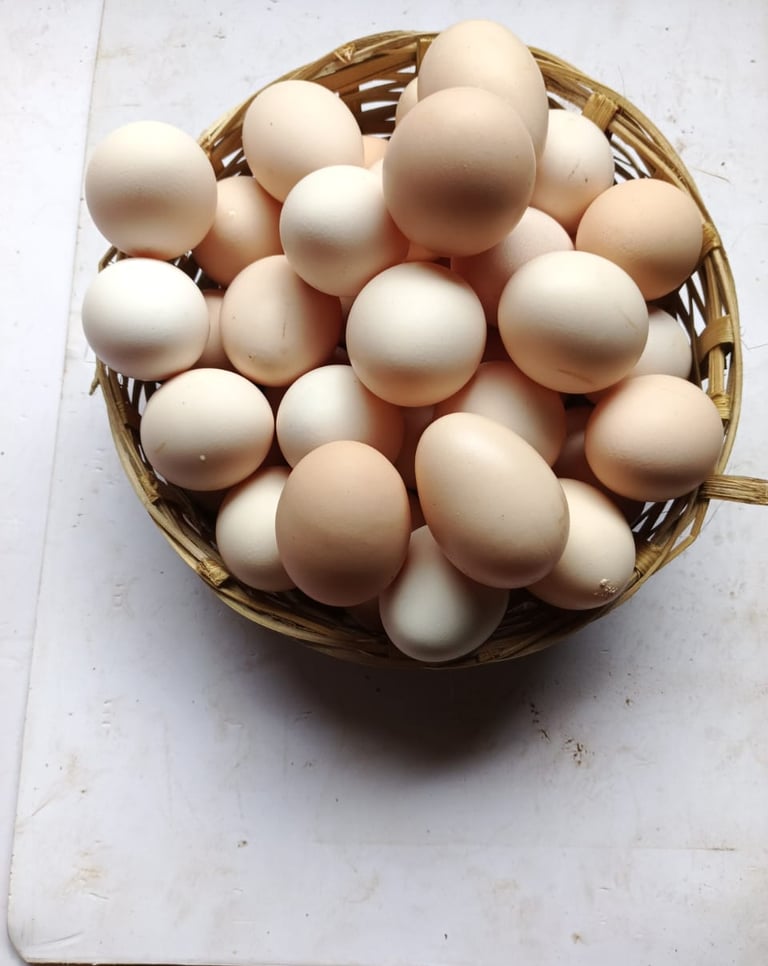
Distinguishing the real from the fake isn't always easy, but there are several key indicators that, when observed together, can help you make an informed choice
The Shell: Hardness, Texture, and Variation
Original Desi Egg:
Thicker, Harder Shell: Desi hens on a natural diet produce eggs with noticeably stronger, thicker shells.
Irregularities: Expect slight variations in shell color (light brown, dark brown, speckled) and texture. They might not be perfectly smooth.
Often Smaller: Generally, desi eggs are slightly smaller than large commercial eggs, though size can vary
Fake/Commercial Egg:
Thinner, More Fragile Shell: Easier to crack.
Uniform Appearance: Very consistent in size, shape, and smooth texture.
The Yolk: Color, Consistency, and Aroma – The Golden Indicator
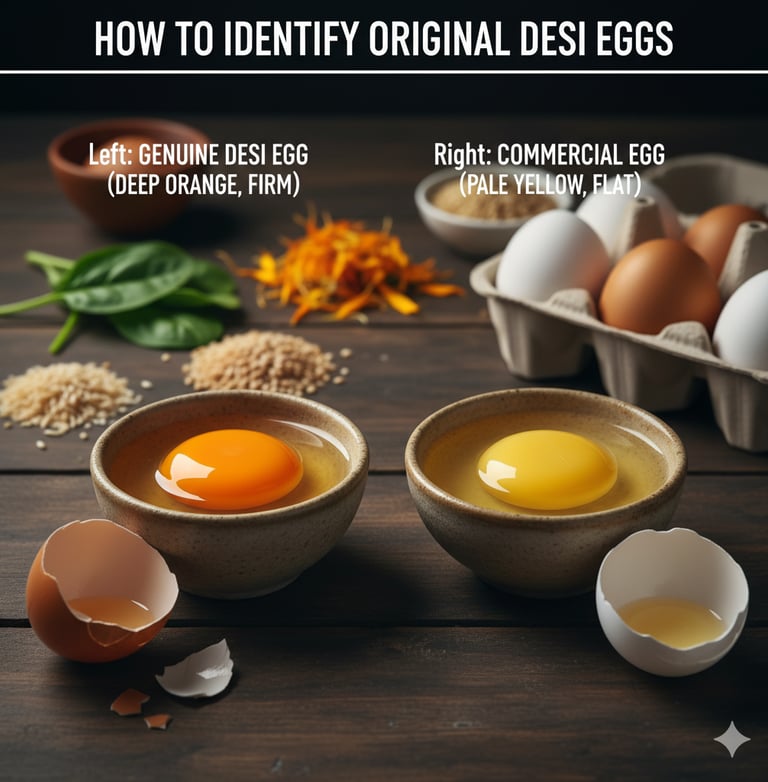
This is perhaps the most reliable identifier once you crack the egg open.
Original Desi Egg:
Deep, Vibrant Yolk Color: Ranging from a rich golden-yellow to a pronounced orange. This is due to the hen's varied diet of greens, insects, and natural pigments (carotenoids).
Firm, High-Standing Yolk: The yolk will hold its spherical shape much better and sit higher off the plate.
Thick Albumen (Egg White): The egg white (albumen) will be noticeably thicker and less watery.
Subtle, Earthy Aroma: A fresh, natural smell, often described as 'eggy' but clean.
Fake/Commercial Egg:
Pale Yellow Yolk: Often a light, insipid yellow. Even if it's darker, it might not have the same vibrancy as a desi egg unless artificially colored.
Flat, Runny Yolk: The yolk tends to spread out more easily.
Thin, Watery Albumen: The egg white spreads out significantly.
Less Distinct Aroma: Often lacks the fresh, earthy scent.
Image 1: Visual Comparison of Cracked Eggs (Yolk Color and Consistency)
This image should clearly show side-by-side a genuine Desi egg (deep orange, firm yolk) and a commercial white egg (pale yellow, flatter yolk).
Source and Supplier: Know Your Farmer (or Retailer)
Reputable Retailers: Buy from trusted local vendors, organic stores, or direct from farms known for genuine free-range practices.
Farm Transparency: Authentic Desi egg producers are usually proud to share details about their hens' diet and living conditions. Don't hesitate to ask questions.
Certification (If Available): While less common for "Desi" specifically, look for "free-range," "pasture-raised," or organic certifications if available in your region.
Expert Opinion: What Poultry Specialists Say
Dr. Rajesh Singh, a veteran poultry scientist, emphasizes: "The diet and environment of the hen are paramount. A hen that forages naturally and isn't confined will produce an egg with a richer micronutrient profile, directly visible in the yolk's vibrancy and the egg's overall structure. Brown shell alone means nothing; it's the lifestyle inside that counts."
This expert insight underscores that shell color is misleading, and the hen's living conditions (which dictate nutrition) are the real differentiator